
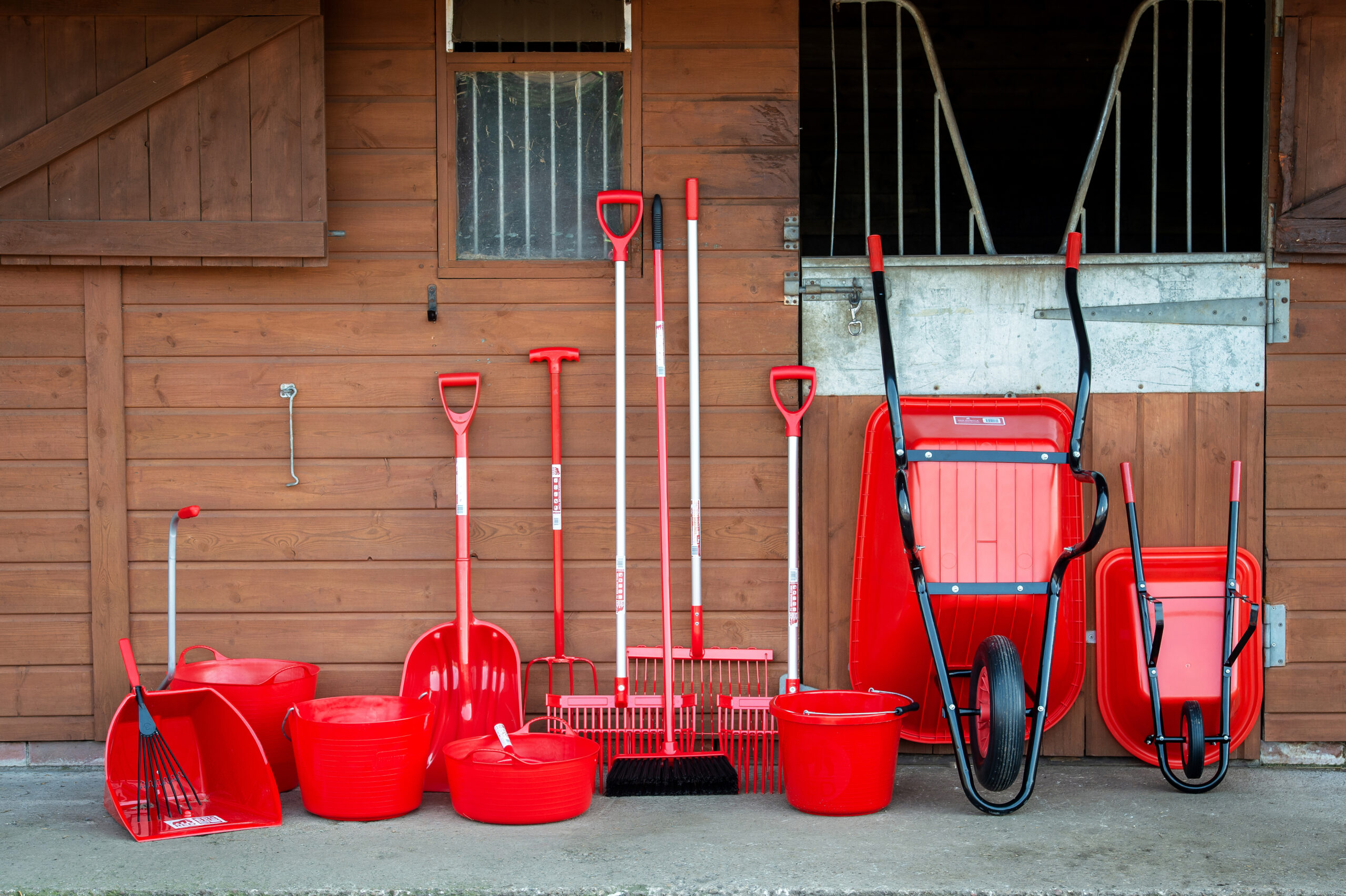
Part three in the series, this week focuses on yard equipment, security and first aid
Do you have a fire extinguisher at the yard – and does everyone know how to use it?
Stable yards are full of flammable material such as hay, straw and shavings, so it’s really important that you have some fire extinguishers to hand. Make sure that everyone knows where they are kept and how to use them as part of your yard’s fire procedure. Extinguishers should be well maintained, serviced regularly and stored correctly. Remember that extinguishers should only be used in the event of small fires, which can be contained immediately. In more serious cases, dial 999 for the fire service, sound the alarm and follow your agreed evacuation procedures.
Is fear of your horse contracting an infectious disease stopping you getting out and about to shows this summer?
Try not to worry as a few simple steps can really help to reduce the risk of picking up infectious diseases such as strangles, which are spread by contact. Follow these tips to stay safe when you’re away from home:
- Take your own water and buckets. Do not use shared tanks.
- Avoid direct contact between your own horse and others.
- Only handle your own horse, or wash your hands after touching other horses, and ask others to do the same.
- Take your own forage rather than using communal grazing.
- Keep disinfectant hand wipes or spray in your travel kit.
- Only use your own tack and equipment.
Are you a little uncertain when it comes to rolling out first-aid?
Lingfield Equine Distance Learning courses have provided these handy do’s and don’ts to help:-
- DO check first-aid box items are in date on a monthly basis. Out of date can mean the item is no longer sterile, nor safe to use.
- DO replace all used items as soon as they are finished.
- DO make sure that whoever phones the vet in an emergency situation writes down basic info before they make the call. This should include the problem, post code, exact location, and the telephone number.
- DON’T make diluted Hibiscrub too strong as it doesn’t make the wound cleaner and it can damage new tissue growth.
- DON’T share medicines with others to give to their horses simply because you have used the medicine for a similar problem. Doing so could cause issues if the full medical history is not known.
- DON’T tighten or overtighten vet wrap as it can reduce blood supply to the area.
Do you have cobwebs in the stable?
If you have, get a hat on, pop on a mask, grab the yard brush and pull them down. Cobwebs around the yard and stables are dust gatherers. They harbour small particles of dirt and grime which can have an adverse effect on the horse’s respiratory system. A clean stable is a healthy stable so keep dust and cobwebs at bay.
Do you know what a basic first-aid kit for the yard should include?
Here’s a great starter for ten for items to include:
- Assorted, wrapped sterile plasters for small cuts and grazes
- Alcohol-free cleansing wipes to clean skin around a wound
- Two sterile eye pads
- Four individually wrapped triangular bandages, preferably sterile
- Two large, individually wrapped, sterile, unmedicated wound dressings for larger wounds
- Disposable non-latex gloves
- Face shield or pocket mask
- Basic first aid manual or instruction booklet
- ‘Tough cut’ style scissors that are strong enough to cut through clothes
